%20--%3e%3csvg%20version='1.1'%20id='Layer_1'%20xmlns='http://www.w3.org/2000/svg'%20xmlns:xlink='http://www.w3.org/1999/xlink'%20x='0px'%20y='0px'%20viewBox='0%200%20546.4%2051'%20style='enable-background:new%200%200%20546.4%2051;'%20xml:space='preserve'%3e%3cstyle%20type='text/css'%3e%20.st0{fill:%23172A80;}%20.st1{fill-rule:evenodd;clip-rule:evenodd;fill:%23F5A623;}%20%3c/style%3e%3cg%3e%3cpath%20class='st0'%20d='M14.9,9.1H0V1.2h38.4v7.8H23.5v40.7h-8.6V9.1z'/%3e%3cpath%20class='st0'%20d='M53,1.2h7.5l20.9,48.5h-9.9L67,38.7H45.9l-4.4,11.1h-9.7L53,1.2z%20M64,31.3l-7.5-19.7l-7.6,19.7H64z'/%3e%3cpath%20class='st0'%20d='M86.1,1.2h11.5l23.5,36.1h0.1V1.2h8.6v48.5h-11l-24-37.2h-0.1v37.2h-8.6V1.2z'/%3e%3cpath%20class='st0'%20d='M183.2,46.2c-6,3.2-12.7,4.8-20.1,4.8c-3.7,0-7.2-0.6-10.3-1.8c-3.1-1.2-5.8-2.9-8.1-5.1c-2.3-2.2-4-4.9-5.3-8%20c-1.3-3.1-1.9-6.6-1.9-10.4c0-3.9,0.6-7.4,1.9-10.6c1.3-3.2,3.1-5.9,5.3-8.1c2.3-2.2,5-4,8.1-5.2c3.1-1.2,6.6-1.8,10.3-1.8%20c3.7,0,7.2,0.4,10.4,1.3c3.2,0.9,6.1,2.5,8.7,4.8l-6.4,6.4c-1.6-1.5-3.4-2.7-5.7-3.5c-2.2-0.8-4.6-1.2-7-1.2%20c-2.5,0-4.8,0.4-6.8,1.3c-2,0.9-3.8,2.1-5.2,3.7c-1.5,1.6-2.6,3.4-3.4,5.5c-0.8,2.1-1.2,4.4-1.2,6.8c0,2.6,0.4,5,1.2,7.2%20c0.8,2.2,1.9,4.1,3.4,5.7c1.5,1.6,3.2,2.9,5.2,3.8c2,0.9,4.3,1.4,6.8,1.4c2.2,0,4.3-0.2,6.2-0.6c1.9-0.4,3.7-1.1,5.2-1.9V29.2h-9.9%20v-7.8h18.6V46.2z'/%3e%3cpath%20class='st0'%20d='M190.1,25.7c0-3.9,0.6-7.4,1.9-10.6c1.3-3.2,3.1-5.9,5.3-8.1c2.3-2.2,5-4,8.1-5.2C208.5,0.6,212,0,215.7,0%20c3.8,0,7.3,0.5,10.4,1.7s5.9,2.9,8.2,5.1c2.3,2.2,4.1,4.9,5.3,8.1c1.3,3.2,1.9,6.7,1.9,10.6c0,3.8-0.6,7.2-1.9,10.4%20c-1.3,3.1-3.1,5.8-5.3,8c-2.3,2.2-5,4-8.2,5.2s-6.6,1.9-10.4,2c-3.7,0-7.2-0.6-10.3-1.8c-3.1-1.2-5.8-2.9-8.1-5.1%20c-2.3-2.2-4-4.9-5.3-8C190.7,33,190.1,29.5,190.1,25.7z%20M199.1,25.2c0,2.6,0.4,5,1.2,7.2c0.8,2.2,1.9,4.1,3.4,5.7%20c1.5,1.6,3.2,2.9,5.2,3.8c2,0.9,4.3,1.4,6.8,1.4c2.5,0,4.8-0.5,6.9-1.4c2.1-0.9,3.8-2.2,5.3-3.8c1.5-1.6,2.6-3.5,3.4-5.7%20c0.8-2.2,1.2-4.6,1.2-7.2c0-2.4-0.4-4.7-1.2-6.8c-0.8-2.1-1.9-3.9-3.4-5.5c-1.5-1.6-3.2-2.8-5.3-3.7c-2.1-0.9-4.3-1.3-6.9-1.3%20c-2.5,0-4.8,0.4-6.8,1.3c-2,0.9-3.8,2.1-5.2,3.7c-1.5,1.6-2.6,3.4-3.4,5.5C199.5,20.5,199.1,22.7,199.1,25.2z'/%3e%3c/g%3e%3cg%3e%3cg%3e%3cpath%20class='st0'%20d='M268.8,1.2H301v7.8h-23.5V21h22.3v7.8h-22.3V42h24.8v7.8h-33.4V1.2z'/%3e%3cpath%20class='st0'%20d='M378.8,9.1h-14.9V1.2h38.4v7.8h-14.9v40.7h-8.6V9.1z'/%3e%3cpath%20class='st0'%20d='M407.5,1.2h32.2v7.8h-23.5V21h22.3v7.8h-22.3V42h24.8v7.8h-33.4V1.2z'/%3e%3cpath%20class='st0'%20d='M448.7,1.2h11.5l23.5,36.1h0.1V1.2h8.6v48.5h-11l-24-37.2h-0.1v37.2h-8.6V1.2z'/%3e%3cpath%20class='st0'%20d='M502.6,1.2h19.1c3.2,0,6.3,0.5,9.3,1.5c3,1,5.6,2.5,7.9,4.5c2.3,2,4.1,4.5,5.5,7.6c1.4,3,2.1,6.6,2.1,10.7%20c0,4.2-0.8,7.8-2.4,10.8c-1.6,3-3.6,5.6-6.1,7.5c-2.5,2-5.3,3.5-8.3,4.5c-3,1-6,1.5-8.9,1.5h-18.1V1.2z%20M517.7,42%20c2.7,0,5.2-0.3,7.6-0.9c2.4-0.6,4.5-1.6,6.3-2.9c1.8-1.3,3.2-3,4.2-5.1c1-2.1,1.5-4.6,1.5-7.6c0-2.9-0.5-5.4-1.4-7.5%20c-0.9-2.1-2.2-3.8-3.8-5.1c-1.6-1.3-3.5-2.3-5.8-2.9c-2.2-0.6-4.7-0.9-7.3-0.9h-7.9V42H517.7z'/%3e%3c/g%3e%3cg%3e%3cpolygon%20class='st0'%20points='348.8,1.3%20338.5,17%20328.3,1.3%20315.8,1.3%20332.1,25.1%20315.1,49.8%20327.3,49.8%20338.2,33.2%20349.1,49.8%20361.6,49.8%20344.7,25%20360.9,1.3%20'/%3e%3cg%3e%3cpolygon%20class='st1'%20points='306.4,1.2%20322,25%20305.4,49.9%20310.2,49.9%20327,25%20311.2,1.2%20'/%3e%3c/g%3e%3c/g%3e%3c/g%3e%3c/svg%3e)
Modernise Your Voice. Future-Proof Your Business.
Copper Is Going. Not All of It Needs Replacing.
The Problem
The Lines Nobody Has Looked At
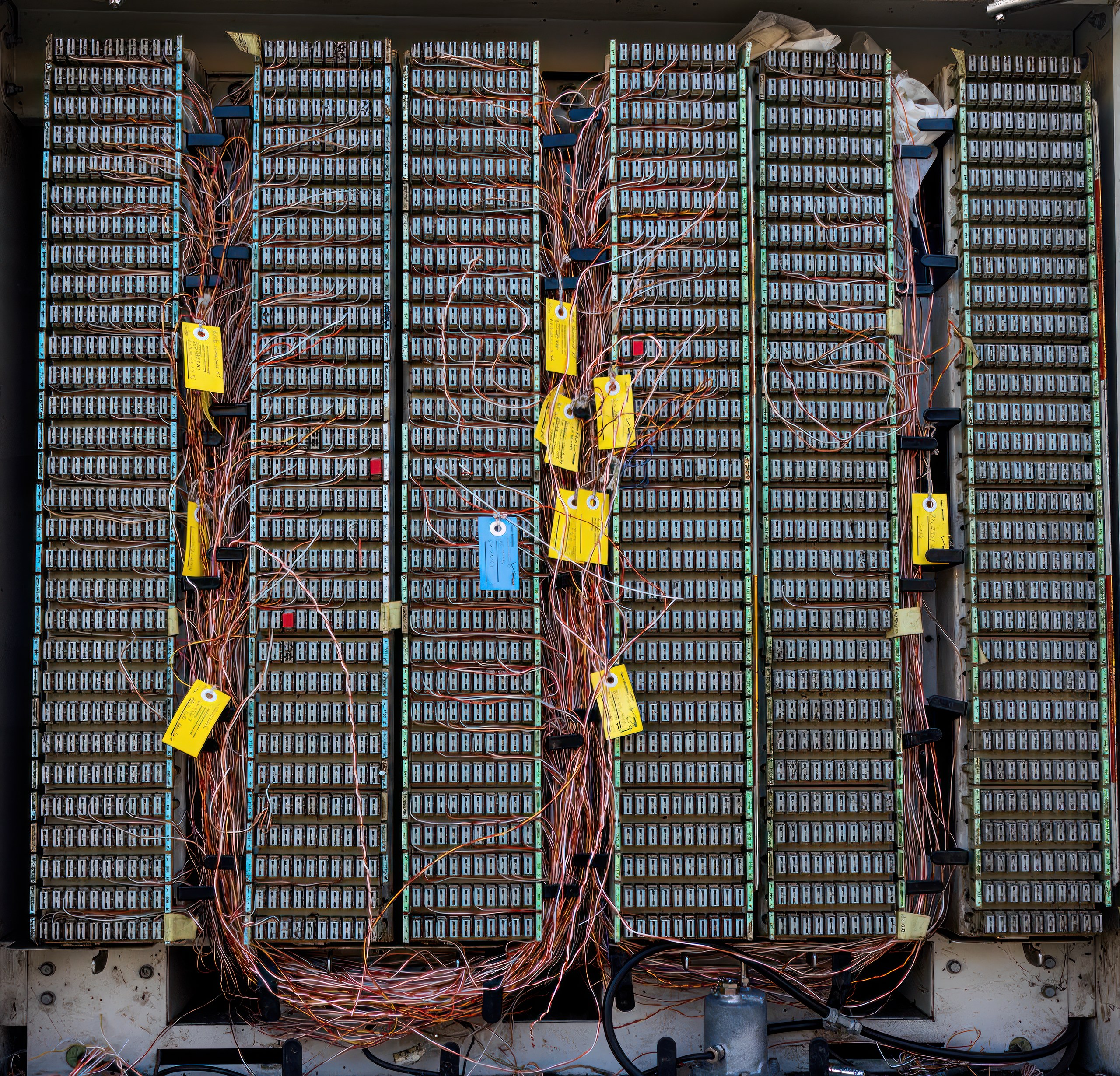
Desk phones were migrated years ago. What is left on copper is the estate nobody has an inventory of, in places nobody visits:
- Lift emergency phones and refuge points — often the only line in the building anyone is legally obliged to keep working
- Intruder and fire alarm signalling — quietly dialling out over a line that is about to be withdrawn
- Door entry, gate intercoms and barrier phones — usually installed by someone who has long since left
- Fax lines, franking machines and lone-worker phones — low usage, full standing charge
- Outbuildings, plant rooms and portacabins — where running new cable costs more than the line ever did
These lines carry almost no traffic and cost the same as the ones that do. They are also the ones a migration project discovers last, because they belong to facilities rather than to IT.
The Impact
What Happens If You Do Nothing
The date is not moving again. Openreach has been explicit that 31 January 2027 stands, and that the network's fragility now makes staying on it the riskier option.
It will not be a single cut-off on the day. Openreach has said there will be no "big bang" on 1 February 2027, and that lines still connected afterwards will be looked at in time and moved to a basic fallback service — Emergency Voice Access. That service is a telephone and nothing else. Where a line is bundled with broadband, the broadband goes.
So the risk is not that everything stops at midnight. It is that the lines you forgot about get migrated for you, onto something that does less, at a moment you did not choose.
The Solution
Two Problems, Two Different Answers
An analogue estate divides in two, and the halves need opposite treatment.
Lines used by people mostly do not need replacing at all. A business line delivered by eSIM to the phone somebody already carries is an extension of your existing platform, so the number, the routing and the call record all survive the copper going. No handset, no new cabling, no site visit.
Lines used by devices do need replacing, and this is where the cheap answer is the wrong one. An IoT SIM is inexpensive but carries voice as best-effort data, which is not what you want on a lift phone. A VoLTE SIM gives proper call quality but is usually expensive and sits outside your phone system entirely, so nothing you do to monitor or record calls applies to it.
Tango Extend gives VoLTE call quality at close to IoT pricing, and routes the call through your own platform — Microsoft Teams Phone, Cisco Webex Calling, BroadWorks, NetSapiens, Zoom Phone and others. A call from an emergency call box behaves like any other call on your system: it can be recorded, routed, escalated and reported on.
One thing to plan rather than assume. Emergency calling from replaced device lines needs to be designed deliberately — it is not automatic, and it is the first thing to settle for lifts and refuge points.
Take it further
Recommended resources
Deep Dive
Explore PSTN Switch-Off (UK)
Future-Proofing Communications: Beyond POTS Obsolescence
Legacy POTS lines are nearing their end. Discover how migrating to a mobile-first solution future-proofs your business communications.
Learn moreDecarbonising Operations: POTS Replacement for a Greener Future
Legacy POTS infrastructure has a hidden carbon footprint. Migrate to mobile-first communications to reduce environmental impact and operational costs.
Learn moreMaintaining Control Amidst POTS Decommissioning
The end of POTS threatens business communication control. Tango Extend empowers you with complete oversight in a mobile-first world.
Learn moreMeeting Compliance Mandates as POTS Ends
POTS decommissioning complicates compliance. Tango Extend provides the regulatory safeguards you need for modern mobile business communications.
Learn moreOptimising Operational Workflows in a Post-POTS Era
POTS replacement is an opportunity to revolutionise operational workflows. Discover how mobile-first integration optimises your business processes.
Learn moreMitigating Service Disruption During POTS Transition
POTS decommissioning threatens service disruption. Tango Extend ensures a smooth, uninterrupted migration to modern mobile communications.
Learn moreNavigating Regulatory Headwinds in POTS Sunset
POTS decommissioning brings regulatory challenges. Tango Extend helps you navigate compliance, ensuring a smooth and lawful transition.
Learn moreThe Proof
Use Cases: POTS Replacement
The analogue network is withdrawn on 31 January 2027. Most of what runs on it does not need replacing with new hardware — it needs replacing with nothing.
- Preparing the Campus for the PSTN Switch-Off — how a large analogue estate divides into lines used by people, which can be removed entirely, and lines used by devices, which cannot. Written for universities, but the division applies to any multi-building estate.
See also the Tango Extend Overview.
Better Business · Control
If I asked your IT Director to pull a report of every mobile call made by your sales team this week, what would they say?
Your IT team governs every desk phone and UC endpoint — routing rules, call policies, presence, recording, analytics. Tango Extend routes every mobile call through your existing UC platform. IT has the same visibility, the same policies and the same controls on mobile as on every other endpoint.