%20--%3e%3csvg%20version='1.1'%20id='Layer_1'%20xmlns='http://www.w3.org/2000/svg'%20xmlns:xlink='http://www.w3.org/1999/xlink'%20x='0px'%20y='0px'%20viewBox='0%200%20546.4%2051'%20style='enable-background:new%200%200%20546.4%2051;'%20xml:space='preserve'%3e%3cstyle%20type='text/css'%3e%20.st0{fill:%23172A80;}%20.st1{fill-rule:evenodd;clip-rule:evenodd;fill:%23F5A623;}%20%3c/style%3e%3cg%3e%3cpath%20class='st0'%20d='M14.9,9.1H0V1.2h38.4v7.8H23.5v40.7h-8.6V9.1z'/%3e%3cpath%20class='st0'%20d='M53,1.2h7.5l20.9,48.5h-9.9L67,38.7H45.9l-4.4,11.1h-9.7L53,1.2z%20M64,31.3l-7.5-19.7l-7.6,19.7H64z'/%3e%3cpath%20class='st0'%20d='M86.1,1.2h11.5l23.5,36.1h0.1V1.2h8.6v48.5h-11l-24-37.2h-0.1v37.2h-8.6V1.2z'/%3e%3cpath%20class='st0'%20d='M183.2,46.2c-6,3.2-12.7,4.8-20.1,4.8c-3.7,0-7.2-0.6-10.3-1.8c-3.1-1.2-5.8-2.9-8.1-5.1c-2.3-2.2-4-4.9-5.3-8%20c-1.3-3.1-1.9-6.6-1.9-10.4c0-3.9,0.6-7.4,1.9-10.6c1.3-3.2,3.1-5.9,5.3-8.1c2.3-2.2,5-4,8.1-5.2c3.1-1.2,6.6-1.8,10.3-1.8%20c3.7,0,7.2,0.4,10.4,1.3c3.2,0.9,6.1,2.5,8.7,4.8l-6.4,6.4c-1.6-1.5-3.4-2.7-5.7-3.5c-2.2-0.8-4.6-1.2-7-1.2%20c-2.5,0-4.8,0.4-6.8,1.3c-2,0.9-3.8,2.1-5.2,3.7c-1.5,1.6-2.6,3.4-3.4,5.5c-0.8,2.1-1.2,4.4-1.2,6.8c0,2.6,0.4,5,1.2,7.2%20c0.8,2.2,1.9,4.1,3.4,5.7c1.5,1.6,3.2,2.9,5.2,3.8c2,0.9,4.3,1.4,6.8,1.4c2.2,0,4.3-0.2,6.2-0.6c1.9-0.4,3.7-1.1,5.2-1.9V29.2h-9.9%20v-7.8h18.6V46.2z'/%3e%3cpath%20class='st0'%20d='M190.1,25.7c0-3.9,0.6-7.4,1.9-10.6c1.3-3.2,3.1-5.9,5.3-8.1c2.3-2.2,5-4,8.1-5.2C208.5,0.6,212,0,215.7,0%20c3.8,0,7.3,0.5,10.4,1.7s5.9,2.9,8.2,5.1c2.3,2.2,4.1,4.9,5.3,8.1c1.3,3.2,1.9,6.7,1.9,10.6c0,3.8-0.6,7.2-1.9,10.4%20c-1.3,3.1-3.1,5.8-5.3,8c-2.3,2.2-5,4-8.2,5.2s-6.6,1.9-10.4,2c-3.7,0-7.2-0.6-10.3-1.8c-3.1-1.2-5.8-2.9-8.1-5.1%20c-2.3-2.2-4-4.9-5.3-8C190.7,33,190.1,29.5,190.1,25.7z%20M199.1,25.2c0,2.6,0.4,5,1.2,7.2c0.8,2.2,1.9,4.1,3.4,5.7%20c1.5,1.6,3.2,2.9,5.2,3.8c2,0.9,4.3,1.4,6.8,1.4c2.5,0,4.8-0.5,6.9-1.4c2.1-0.9,3.8-2.2,5.3-3.8c1.5-1.6,2.6-3.5,3.4-5.7%20c0.8-2.2,1.2-4.6,1.2-7.2c0-2.4-0.4-4.7-1.2-6.8c-0.8-2.1-1.9-3.9-3.4-5.5c-1.5-1.6-3.2-2.8-5.3-3.7c-2.1-0.9-4.3-1.3-6.9-1.3%20c-2.5,0-4.8,0.4-6.8,1.3c-2,0.9-3.8,2.1-5.2,3.7c-1.5,1.6-2.6,3.4-3.4,5.5C199.5,20.5,199.1,22.7,199.1,25.2z'/%3e%3c/g%3e%3cg%3e%3cg%3e%3cpath%20class='st0'%20d='M268.8,1.2H301v7.8h-23.5V21h22.3v7.8h-22.3V42h24.8v7.8h-33.4V1.2z'/%3e%3cpath%20class='st0'%20d='M378.8,9.1h-14.9V1.2h38.4v7.8h-14.9v40.7h-8.6V9.1z'/%3e%3cpath%20class='st0'%20d='M407.5,1.2h32.2v7.8h-23.5V21h22.3v7.8h-22.3V42h24.8v7.8h-33.4V1.2z'/%3e%3cpath%20class='st0'%20d='M448.7,1.2h11.5l23.5,36.1h0.1V1.2h8.6v48.5h-11l-24-37.2h-0.1v37.2h-8.6V1.2z'/%3e%3cpath%20class='st0'%20d='M502.6,1.2h19.1c3.2,0,6.3,0.5,9.3,1.5c3,1,5.6,2.5,7.9,4.5c2.3,2,4.1,4.5,5.5,7.6c1.4,3,2.1,6.6,2.1,10.7%20c0,4.2-0.8,7.8-2.4,10.8c-1.6,3-3.6,5.6-6.1,7.5c-2.5,2-5.3,3.5-8.3,4.5c-3,1-6,1.5-8.9,1.5h-18.1V1.2z%20M517.7,42%20c2.7,0,5.2-0.3,7.6-0.9c2.4-0.6,4.5-1.6,6.3-2.9c1.8-1.3,3.2-3,4.2-5.1c1-2.1,1.5-4.6,1.5-7.6c0-2.9-0.5-5.4-1.4-7.5%20c-0.9-2.1-2.2-3.8-3.8-5.1c-1.6-1.3-3.5-2.3-5.8-2.9c-2.2-0.6-4.7-0.9-7.3-0.9h-7.9V42H517.7z'/%3e%3c/g%3e%3cg%3e%3cpolygon%20class='st0'%20points='348.8,1.3%20338.5,17%20328.3,1.3%20315.8,1.3%20332.1,25.1%20315.1,49.8%20327.3,49.8%20338.2,33.2%20349.1,49.8%20361.6,49.8%20344.7,25%20360.9,1.3%20'/%3e%3cg%3e%3cpolygon%20class='st1'%20points='306.4,1.2%20322,25%20305.4,49.9%20310.2,49.9%20327,25%20311.2,1.2%20'/%3e%3c/g%3e%3c/g%3e%3c/g%3e%3c/svg%3e)
Your Copper Is Being Retired. Some of It Already Has.
The Problem
The Lines Nobody Has an Inventory Of
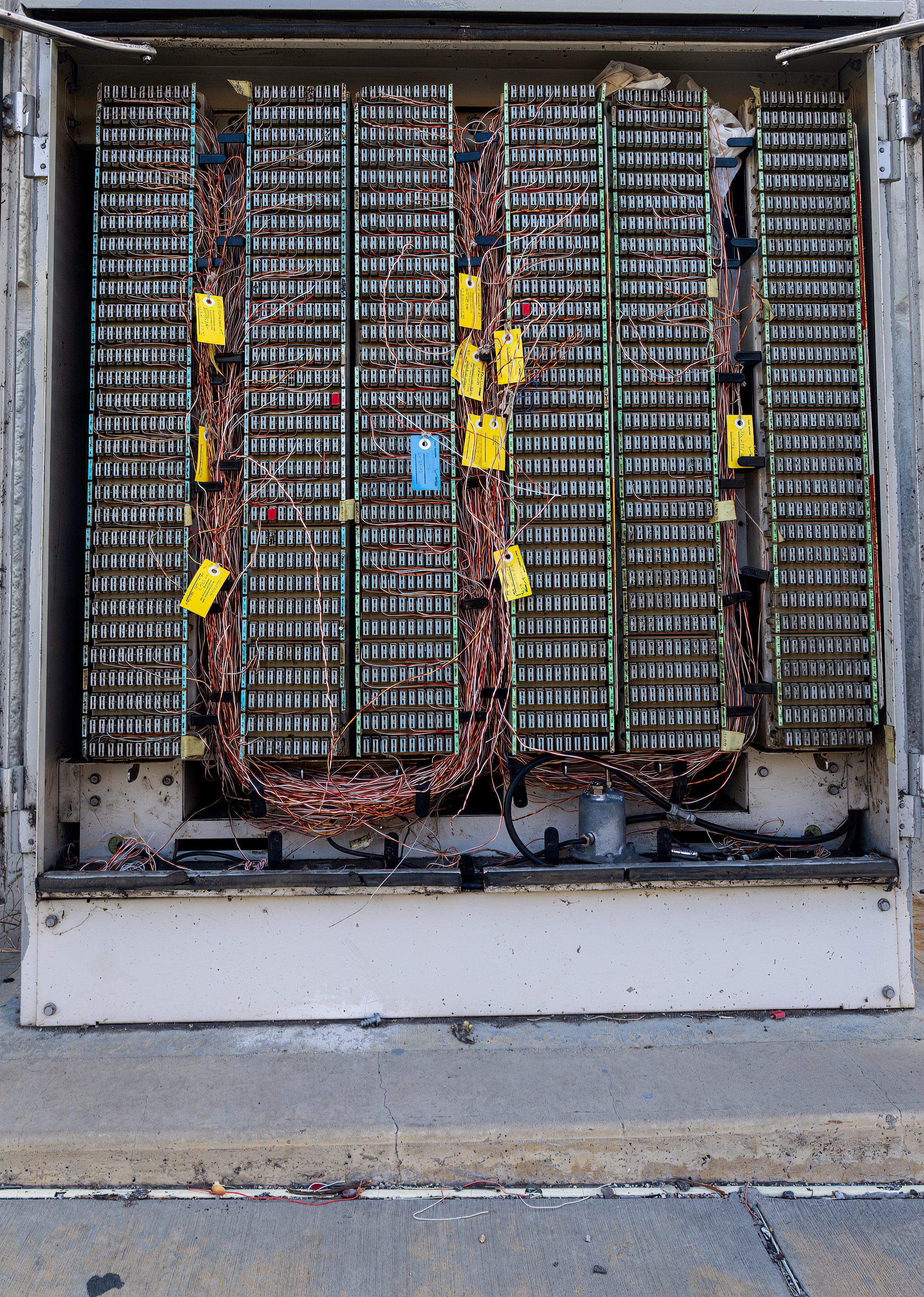
Desk phones moved to VoIP years ago. What is still on copper is the estate that belongs to facilities rather than IT, in places nobody visits:
- Elevator emergency phones — usually the one line in the building somebody is legally obliged to keep working
- Fire and intruder alarm panels — dialing out over a line scheduled for retirement
- Emergency call boxes, gate intercoms and parking barriers — installed by a contractor who left years ago
- Fax lines, postage meters and blue-light phones — almost no traffic, full monthly charge
- Outbuildings, plant rooms and remote sites — where pulling new fiber costs more than the line ever did
These are the lines a migration project finds last, and the ones that are hardest to move quickly when a notice arrives.
The Impact
There Is No National Deadline. That Is the Problem.
On 26 March 2026 the FCC voted to remove much of the process that used to slow copper retirement down — network change disclosures, discontinuance friction and the state-level challenge route. Retirement is now largely a carrier scheduling decision.
It is already under way. AT&T stopped accepting new installs, moves and changes on many legacy copper services across nearly twenty states in October 2025, began decommissioning roughly 500 wire centers — about a tenth of its network — from June 2026, and has filed to discontinue service affecting around 90,000 customers across eighteen states. Its stated target is the vast majority of its footprint by the end of 2029. Verizon, Lumen, Frontier and CenturyLink have all filed retirement notices of their own.
A single national date would at least be plannable. What organizations get instead is a notice for one wire center, addressed to whoever signed up for the line, about equipment nobody has looked at in a decade.
The Solution
Two Problems, Two Different Answers
A copper estate divides in two, and the halves want opposite treatment.
Lines used by people mostly do not need replacing at all. A business line delivered by eSIM to the phone somebody already carries becomes an extension of your existing platform, so the number, the routing and the call record survive the copper going. No handset to ship, no cabling, no truck roll.
Lines used by devices do need replacing, and here the cheapest option is the wrong one. An IoT SIM is inexpensive but carries voice as best-effort data, which is not what belongs on an elevator phone. A VoLTE SIM delivers proper call quality but is usually expensive and sits outside your phone system entirely, so nothing you do to monitor, record or route calls applies to it.
Tango Extend delivers VoLTE call quality at close to IoT pricing and routes the call through your own platform — Microsoft Teams Phone, Cisco Webex Calling, BroadWorks, NetSapiens, Zoom Phone and others. A call from an emergency call box behaves like any other call on your system: recorded, routed, escalated, reported.
One thing to design rather than assume. E911 location handling on replaced device lines has to be worked through deliberately. It is not automatic, and for elevator phones and emergency call boxes it is the first thing to settle, not the last.
The Proof
Use Cases: Copper Retirement
Most of what sits on a copper line does not need replacing with new hardware. It needs replacing with nothing.
- Preparing the Campus for the PSTN Switch-Off — how a large analog estate divides into lines used by people, which can be removed entirely, and lines used by devices, which cannot. Written around the UK timetable, but the division applies to any multi-building estate.
- Thirty Ways Frontline Teams Use Tango Extend — the wider pattern behind the people half of the estate.
See also the Tango Extend Overview.
Better Business · Sustainability
When did you last calculate the true total cost of your corporate mobile fleet — including IT management time, repairs and replacements?
The device purchase is the visible cost. IT management time, insurance, repair, replacement, contract admin and expense processing can double or triple the headline number. Tango Extend eliminates the corporate device entirely for BYOD deployments.