%20--%3e%3csvg%20version='1.1'%20id='Layer_1'%20xmlns='http://www.w3.org/2000/svg'%20xmlns:xlink='http://www.w3.org/1999/xlink'%20x='0px'%20y='0px'%20viewBox='0%200%20546.4%2051'%20style='enable-background:new%200%200%20546.4%2051;'%20xml:space='preserve'%3e%3cstyle%20type='text/css'%3e%20.st0{fill:%23172A80;}%20.st1{fill-rule:evenodd;clip-rule:evenodd;fill:%23F5A623;}%20%3c/style%3e%3cg%3e%3cpath%20class='st0'%20d='M14.9,9.1H0V1.2h38.4v7.8H23.5v40.7h-8.6V9.1z'/%3e%3cpath%20class='st0'%20d='M53,1.2h7.5l20.9,48.5h-9.9L67,38.7H45.9l-4.4,11.1h-9.7L53,1.2z%20M64,31.3l-7.5-19.7l-7.6,19.7H64z'/%3e%3cpath%20class='st0'%20d='M86.1,1.2h11.5l23.5,36.1h0.1V1.2h8.6v48.5h-11l-24-37.2h-0.1v37.2h-8.6V1.2z'/%3e%3cpath%20class='st0'%20d='M183.2,46.2c-6,3.2-12.7,4.8-20.1,4.8c-3.7,0-7.2-0.6-10.3-1.8c-3.1-1.2-5.8-2.9-8.1-5.1c-2.3-2.2-4-4.9-5.3-8%20c-1.3-3.1-1.9-6.6-1.9-10.4c0-3.9,0.6-7.4,1.9-10.6c1.3-3.2,3.1-5.9,5.3-8.1c2.3-2.2,5-4,8.1-5.2c3.1-1.2,6.6-1.8,10.3-1.8%20c3.7,0,7.2,0.4,10.4,1.3c3.2,0.9,6.1,2.5,8.7,4.8l-6.4,6.4c-1.6-1.5-3.4-2.7-5.7-3.5c-2.2-0.8-4.6-1.2-7-1.2%20c-2.5,0-4.8,0.4-6.8,1.3c-2,0.9-3.8,2.1-5.2,3.7c-1.5,1.6-2.6,3.4-3.4,5.5c-0.8,2.1-1.2,4.4-1.2,6.8c0,2.6,0.4,5,1.2,7.2%20c0.8,2.2,1.9,4.1,3.4,5.7c1.5,1.6,3.2,2.9,5.2,3.8c2,0.9,4.3,1.4,6.8,1.4c2.2,0,4.3-0.2,6.2-0.6c1.9-0.4,3.7-1.1,5.2-1.9V29.2h-9.9%20v-7.8h18.6V46.2z'/%3e%3cpath%20class='st0'%20d='M190.1,25.7c0-3.9,0.6-7.4,1.9-10.6c1.3-3.2,3.1-5.9,5.3-8.1c2.3-2.2,5-4,8.1-5.2C208.5,0.6,212,0,215.7,0%20c3.8,0,7.3,0.5,10.4,1.7s5.9,2.9,8.2,5.1c2.3,2.2,4.1,4.9,5.3,8.1c1.3,3.2,1.9,6.7,1.9,10.6c0,3.8-0.6,7.2-1.9,10.4%20c-1.3,3.1-3.1,5.8-5.3,8c-2.3,2.2-5,4-8.2,5.2s-6.6,1.9-10.4,2c-3.7,0-7.2-0.6-10.3-1.8c-3.1-1.2-5.8-2.9-8.1-5.1%20c-2.3-2.2-4-4.9-5.3-8C190.7,33,190.1,29.5,190.1,25.7z%20M199.1,25.2c0,2.6,0.4,5,1.2,7.2c0.8,2.2,1.9,4.1,3.4,5.7%20c1.5,1.6,3.2,2.9,5.2,3.8c2,0.9,4.3,1.4,6.8,1.4c2.5,0,4.8-0.5,6.9-1.4c2.1-0.9,3.8-2.2,5.3-3.8c1.5-1.6,2.6-3.5,3.4-5.7%20c0.8-2.2,1.2-4.6,1.2-7.2c0-2.4-0.4-4.7-1.2-6.8c-0.8-2.1-1.9-3.9-3.4-5.5c-1.5-1.6-3.2-2.8-5.3-3.7c-2.1-0.9-4.3-1.3-6.9-1.3%20c-2.5,0-4.8,0.4-6.8,1.3c-2,0.9-3.8,2.1-5.2,3.7c-1.5,1.6-2.6,3.4-3.4,5.5C199.5,20.5,199.1,22.7,199.1,25.2z'/%3e%3c/g%3e%3cg%3e%3cg%3e%3cpath%20class='st0'%20d='M268.8,1.2H301v7.8h-23.5V21h22.3v7.8h-22.3V42h24.8v7.8h-33.4V1.2z'/%3e%3cpath%20class='st0'%20d='M378.8,9.1h-14.9V1.2h38.4v7.8h-14.9v40.7h-8.6V9.1z'/%3e%3cpath%20class='st0'%20d='M407.5,1.2h32.2v7.8h-23.5V21h22.3v7.8h-22.3V42h24.8v7.8h-33.4V1.2z'/%3e%3cpath%20class='st0'%20d='M448.7,1.2h11.5l23.5,36.1h0.1V1.2h8.6v48.5h-11l-24-37.2h-0.1v37.2h-8.6V1.2z'/%3e%3cpath%20class='st0'%20d='M502.6,1.2h19.1c3.2,0,6.3,0.5,9.3,1.5c3,1,5.6,2.5,7.9,4.5c2.3,2,4.1,4.5,5.5,7.6c1.4,3,2.1,6.6,2.1,10.7%20c0,4.2-0.8,7.8-2.4,10.8c-1.6,3-3.6,5.6-6.1,7.5c-2.5,2-5.3,3.5-8.3,4.5c-3,1-6,1.5-8.9,1.5h-18.1V1.2z%20M517.7,42%20c2.7,0,5.2-0.3,7.6-0.9c2.4-0.6,4.5-1.6,6.3-2.9c1.8-1.3,3.2-3,4.2-5.1c1-2.1,1.5-4.6,1.5-7.6c0-2.9-0.5-5.4-1.4-7.5%20c-0.9-2.1-2.2-3.8-3.8-5.1c-1.6-1.3-3.5-2.3-5.8-2.9c-2.2-0.6-4.7-0.9-7.3-0.9h-7.9V42H517.7z'/%3e%3c/g%3e%3cg%3e%3cpolygon%20class='st0'%20points='348.8,1.3%20338.5,17%20328.3,1.3%20315.8,1.3%20332.1,25.1%20315.1,49.8%20327.3,49.8%20338.2,33.2%20349.1,49.8%20361.6,49.8%20344.7,25%20360.9,1.3%20'/%3e%3cg%3e%3cpolygon%20class='st1'%20points='306.4,1.2%20322,25%20305.4,49.9%20310.2,49.9%20327,25%20311.2,1.2%20'/%3e%3c/g%3e%3c/g%3e%3c/g%3e%3c/svg%3e)
EDUCATION USE CASE
Mobile-First Communications for Campus Services
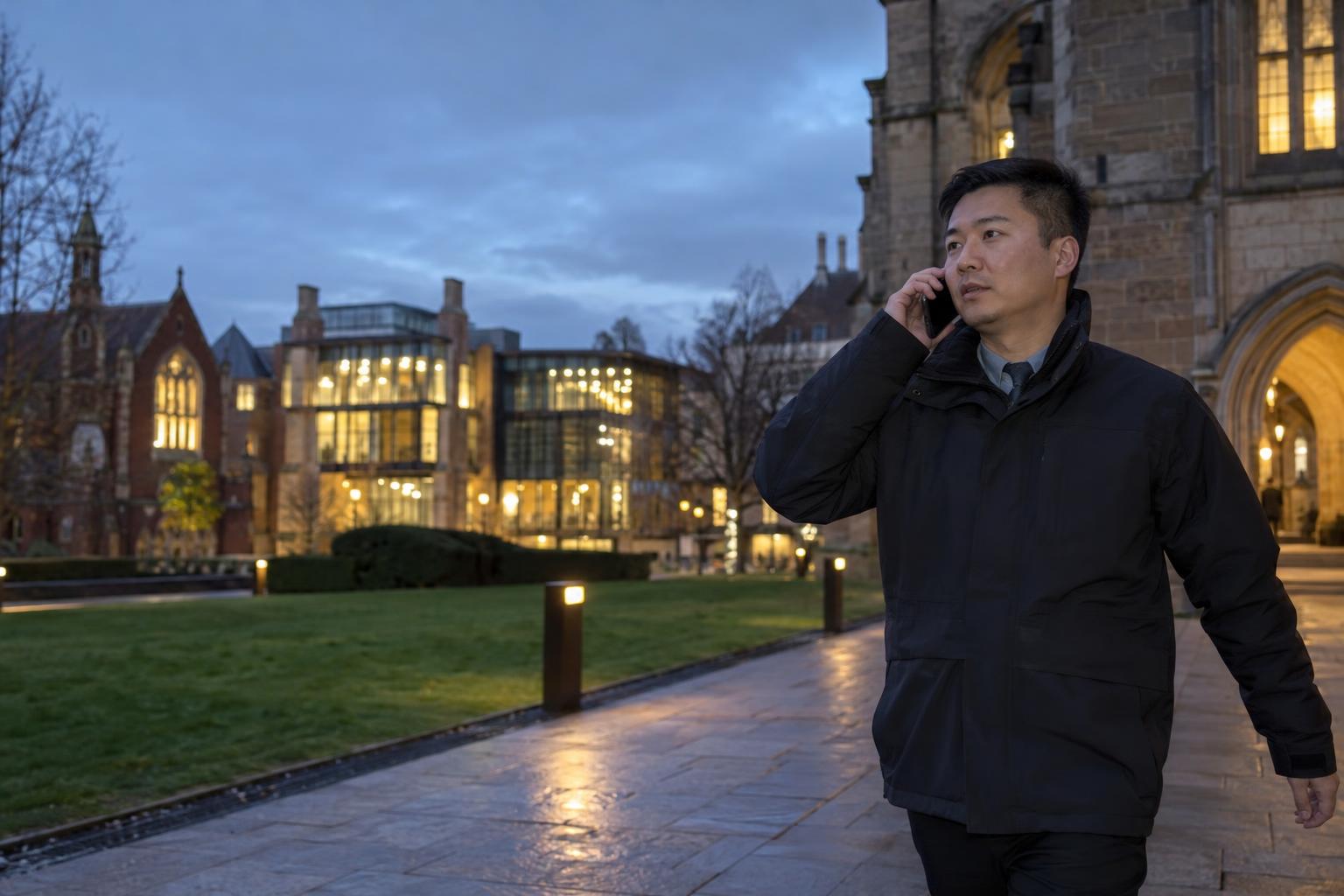
Universities run like small towns. Security, grounds, maintenance, cleaning, catering and residences teams keep the campus operating around the clock, and almost none of them work at a desk.
Many still depend on two-way radio, DECT handsets or personal mobiles, which leave gaps in coverage, identity and control. This use case sets out what changes when every deskless role is reachable on one institutional number.
At-a-Glance
- Sector
- Higher and further education
- Setting
- Campus estate, on and off site, around the clock
- Teams
- Security, grounds, maintenance, catering, residences
- Deployment
- Business line on personal, corporate or rugged handsets
- Platform
- The institution's existing UC platform
Solution Highlights
- One institutional number for every deskless role
- Native dialler, no app to install
- Radio and DECT replacement
- eSIM set-up by QR code
The Challenge
A university's facilities teams keep the estate running, and almost none of them work at a desk.
Communications are usually a patchwork. Radio covers some teams but rarely reaches past the campus boundary, DECT stops at the edge of the site, and personal mobiles fill the gaps. That leaves no consistent caller identity, no record of what was said, and no reliable way to reach someone who does not answer.
The Solution
Tango Extend makes the mobile phone the standard endpoint for every deskless role. It is added to the institution's existing UC platform like any other endpoint, putting a full business line on a personal, corporate or rugged device.
Staff use the phone's own dialler, with no app to install or keep signed in. Calls carry the institution's identity and route through the UC platform, so call handling, hunt groups and reporting work as they do for office staff.
Coverage follows the mobile network rather than the campus perimeter. IT provisions users centrally, and staff activate their line by scanning a QR code.
What Changes
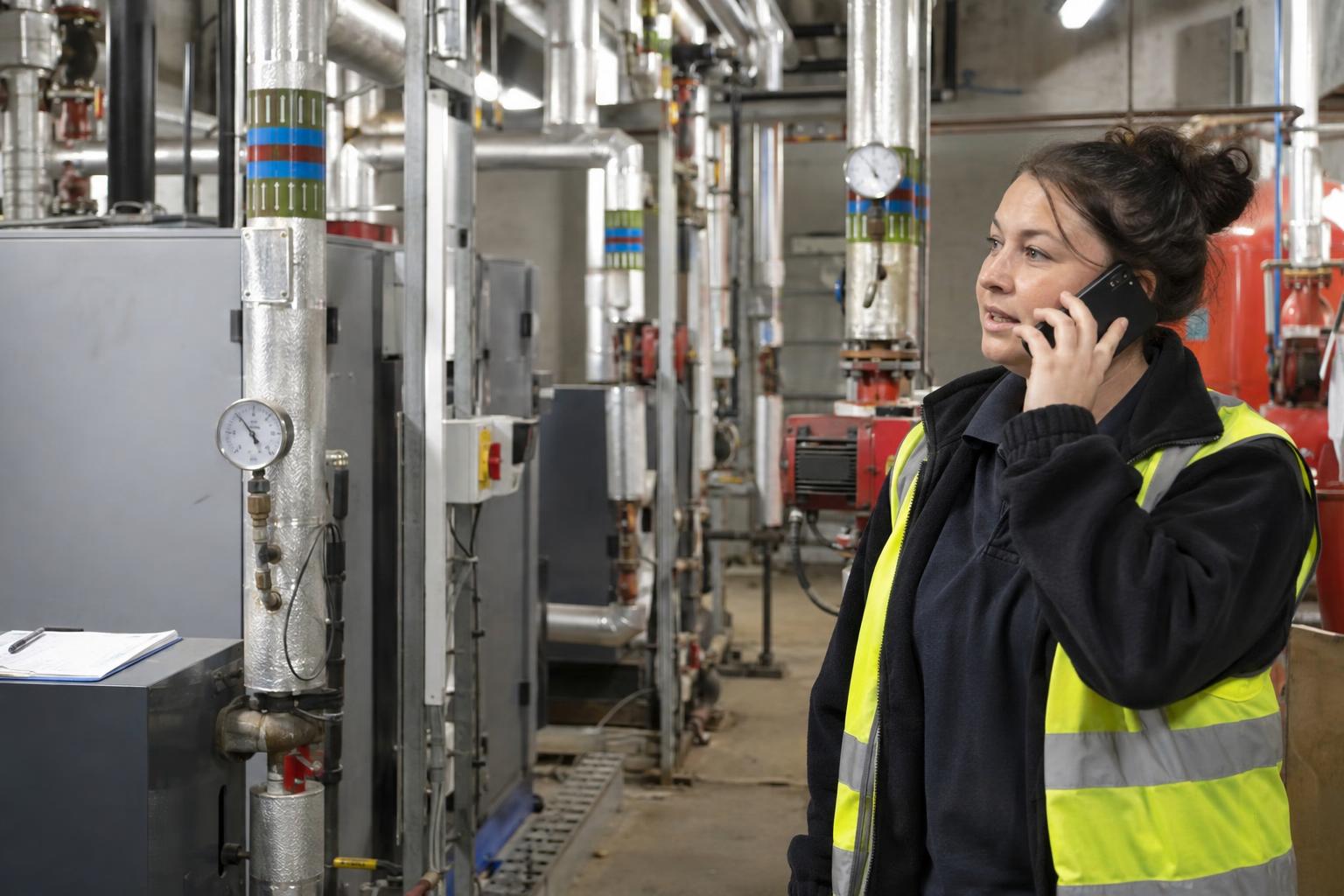
The first change is reach. Call-out crews and out-of-hours duty staff are contactable on one known institutional number, on and off campus, with calls recorded where the institution requires it and its platform is set up to do so.
The second is the estate. Retiring radio and DECT removes the base stations, licences and handset replacement cycles that come with them, and fewer devices support sustainability targets.
The third is flexibility. Because the service is not tied to a building, teams can be moved or restructured without a telephony project attached.
Key Changes
- Deskless and lone-working staff on one number
- Radio and DECT infrastructure retired
- Restructuring no longer constrained by fixed telephony
- Central IT control across the estate
Assessment
Nine questions about your own institution. The ones you can't answer are the ones worth looking into.
How it works today
- How do security, grounds and catering teams communicate on shift?
- What happens when someone must be reached beyond the campus boundary?
- How are out-of-hours and emergency call-out teams contacted?
What it is costing
- What do radio and DECT cost each year, including licences?
- How many communications systems run alongside the UC platform?
- How many deskless staff are on unmanaged personal mobiles?
What would change
- Which teams could be restructured if reachability were not a constraint?
- What would retiring the radio and desk phone estate release?
- Who would you reach out of hours that you cannot reach today?
A campus runs on the people who keep it working. Putting the institution's line on the phones those teams already carry aligns communications with how they actually work: on the move, across a dispersed estate and often outside office hours.
Replacing radio, DECT and personal mobiles with one approach improves response and removes a constraint on how campus services are organised.
Looking Ahead
Illustrative scenario. Not a specific customer.
Learn More
Visit tango-networks.com or contact your local Tango Extend partner
for a personalised demonstration.
Version 2.0 · November 2026