%20--%3e%3csvg%20version='1.1'%20id='Layer_1'%20xmlns='http://www.w3.org/2000/svg'%20xmlns:xlink='http://www.w3.org/1999/xlink'%20x='0px'%20y='0px'%20viewBox='0%200%20546.4%2051'%20style='enable-background:new%200%200%20546.4%2051;'%20xml:space='preserve'%3e%3cstyle%20type='text/css'%3e%20.st0{fill:%23172A80;}%20.st1{fill-rule:evenodd;clip-rule:evenodd;fill:%23F5A623;}%20%3c/style%3e%3cg%3e%3cpath%20class='st0'%20d='M14.9,9.1H0V1.2h38.4v7.8H23.5v40.7h-8.6V9.1z'/%3e%3cpath%20class='st0'%20d='M53,1.2h7.5l20.9,48.5h-9.9L67,38.7H45.9l-4.4,11.1h-9.7L53,1.2z%20M64,31.3l-7.5-19.7l-7.6,19.7H64z'/%3e%3cpath%20class='st0'%20d='M86.1,1.2h11.5l23.5,36.1h0.1V1.2h8.6v48.5h-11l-24-37.2h-0.1v37.2h-8.6V1.2z'/%3e%3cpath%20class='st0'%20d='M183.2,46.2c-6,3.2-12.7,4.8-20.1,4.8c-3.7,0-7.2-0.6-10.3-1.8c-3.1-1.2-5.8-2.9-8.1-5.1c-2.3-2.2-4-4.9-5.3-8%20c-1.3-3.1-1.9-6.6-1.9-10.4c0-3.9,0.6-7.4,1.9-10.6c1.3-3.2,3.1-5.9,5.3-8.1c2.3-2.2,5-4,8.1-5.2c3.1-1.2,6.6-1.8,10.3-1.8%20c3.7,0,7.2,0.4,10.4,1.3c3.2,0.9,6.1,2.5,8.7,4.8l-6.4,6.4c-1.6-1.5-3.4-2.7-5.7-3.5c-2.2-0.8-4.6-1.2-7-1.2%20c-2.5,0-4.8,0.4-6.8,1.3c-2,0.9-3.8,2.1-5.2,3.7c-1.5,1.6-2.6,3.4-3.4,5.5c-0.8,2.1-1.2,4.4-1.2,6.8c0,2.6,0.4,5,1.2,7.2%20c0.8,2.2,1.9,4.1,3.4,5.7c1.5,1.6,3.2,2.9,5.2,3.8c2,0.9,4.3,1.4,6.8,1.4c2.2,0,4.3-0.2,6.2-0.6c1.9-0.4,3.7-1.1,5.2-1.9V29.2h-9.9%20v-7.8h18.6V46.2z'/%3e%3cpath%20class='st0'%20d='M190.1,25.7c0-3.9,0.6-7.4,1.9-10.6c1.3-3.2,3.1-5.9,5.3-8.1c2.3-2.2,5-4,8.1-5.2C208.5,0.6,212,0,215.7,0%20c3.8,0,7.3,0.5,10.4,1.7s5.9,2.9,8.2,5.1c2.3,2.2,4.1,4.9,5.3,8.1c1.3,3.2,1.9,6.7,1.9,10.6c0,3.8-0.6,7.2-1.9,10.4%20c-1.3,3.1-3.1,5.8-5.3,8c-2.3,2.2-5,4-8.2,5.2s-6.6,1.9-10.4,2c-3.7,0-7.2-0.6-10.3-1.8c-3.1-1.2-5.8-2.9-8.1-5.1%20c-2.3-2.2-4-4.9-5.3-8C190.7,33,190.1,29.5,190.1,25.7z%20M199.1,25.2c0,2.6,0.4,5,1.2,7.2c0.8,2.2,1.9,4.1,3.4,5.7%20c1.5,1.6,3.2,2.9,5.2,3.8c2,0.9,4.3,1.4,6.8,1.4c2.5,0,4.8-0.5,6.9-1.4c2.1-0.9,3.8-2.2,5.3-3.8c1.5-1.6,2.6-3.5,3.4-5.7%20c0.8-2.2,1.2-4.6,1.2-7.2c0-2.4-0.4-4.7-1.2-6.8c-0.8-2.1-1.9-3.9-3.4-5.5c-1.5-1.6-3.2-2.8-5.3-3.7c-2.1-0.9-4.3-1.3-6.9-1.3%20c-2.5,0-4.8,0.4-6.8,1.3c-2,0.9-3.8,2.1-5.2,3.7c-1.5,1.6-2.6,3.4-3.4,5.5C199.5,20.5,199.1,22.7,199.1,25.2z'/%3e%3c/g%3e%3cg%3e%3cg%3e%3cpath%20class='st0'%20d='M268.8,1.2H301v7.8h-23.5V21h22.3v7.8h-22.3V42h24.8v7.8h-33.4V1.2z'/%3e%3cpath%20class='st0'%20d='M378.8,9.1h-14.9V1.2h38.4v7.8h-14.9v40.7h-8.6V9.1z'/%3e%3cpath%20class='st0'%20d='M407.5,1.2h32.2v7.8h-23.5V21h22.3v7.8h-22.3V42h24.8v7.8h-33.4V1.2z'/%3e%3cpath%20class='st0'%20d='M448.7,1.2h11.5l23.5,36.1h0.1V1.2h8.6v48.5h-11l-24-37.2h-0.1v37.2h-8.6V1.2z'/%3e%3cpath%20class='st0'%20d='M502.6,1.2h19.1c3.2,0,6.3,0.5,9.3,1.5c3,1,5.6,2.5,7.9,4.5c2.3,2,4.1,4.5,5.5,7.6c1.4,3,2.1,6.6,2.1,10.7%20c0,4.2-0.8,7.8-2.4,10.8c-1.6,3-3.6,5.6-6.1,7.5c-2.5,2-5.3,3.5-8.3,4.5c-3,1-6,1.5-8.9,1.5h-18.1V1.2z%20M517.7,42%20c2.7,0,5.2-0.3,7.6-0.9c2.4-0.6,4.5-1.6,6.3-2.9c1.8-1.3,3.2-3,4.2-5.1c1-2.1,1.5-4.6,1.5-7.6c0-2.9-0.5-5.4-1.4-7.5%20c-0.9-2.1-2.2-3.8-3.8-5.1c-1.6-1.3-3.5-2.3-5.8-2.9c-2.2-0.6-4.7-0.9-7.3-0.9h-7.9V42H517.7z'/%3e%3c/g%3e%3cg%3e%3cpolygon%20class='st0'%20points='348.8,1.3%20338.5,17%20328.3,1.3%20315.8,1.3%20332.1,25.1%20315.1,49.8%20327.3,49.8%20338.2,33.2%20349.1,49.8%20361.6,49.8%20344.7,25%20360.9,1.3%20'/%3e%3cg%3e%3cpolygon%20class='st1'%20points='306.4,1.2%20322,25%20305.4,49.9%20310.2,49.9%20327,25%20311.2,1.2%20'/%3e%3c/g%3e%3c/g%3e%3c/g%3e%3c/svg%3e)
EDUCATION USE CASE
Mobile-First Communications for Schools
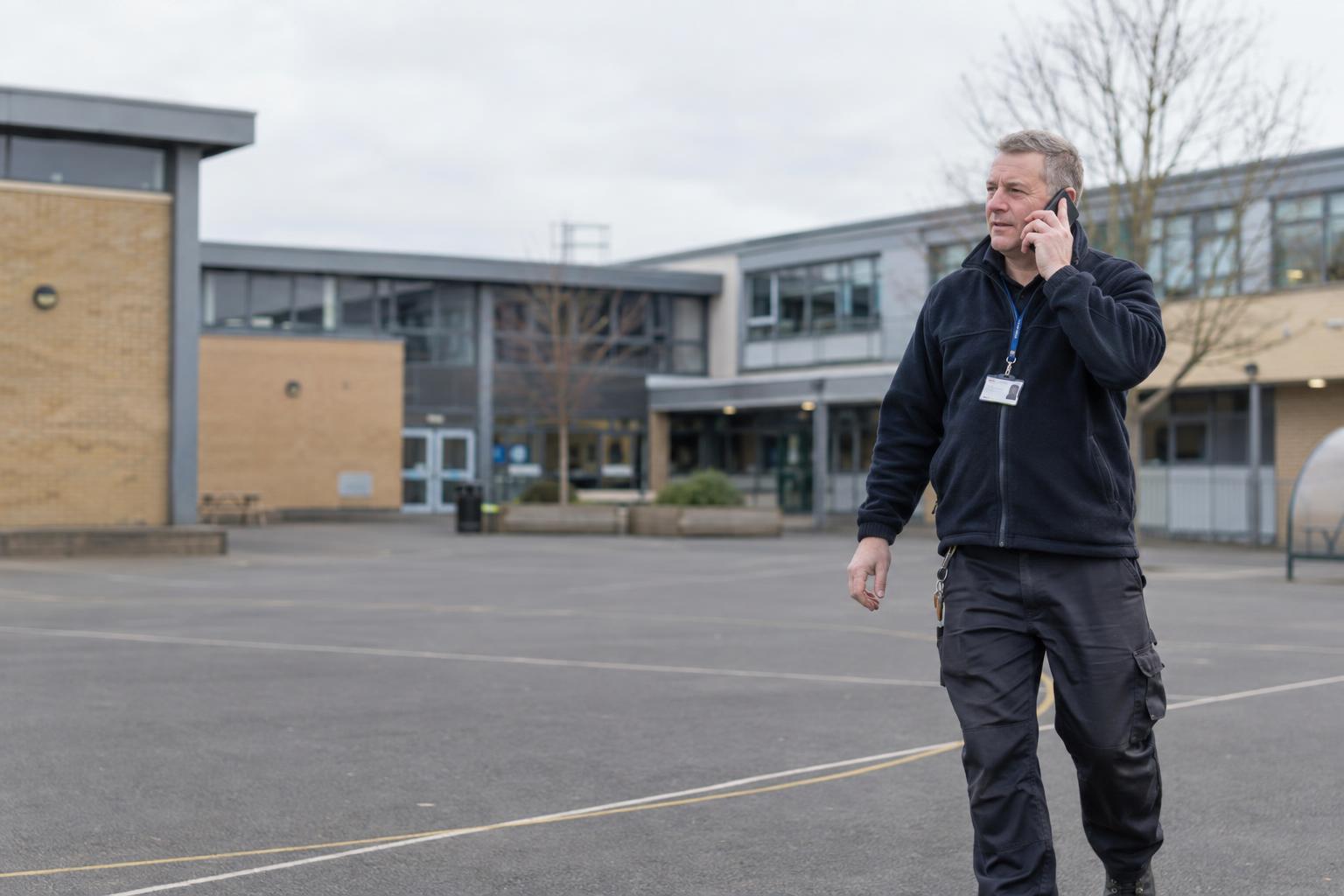
A school day moves fast. Teachers, caretakers and support staff are constantly between classrooms, halls, playgrounds and outbuildings, rarely near a desk phone.
This use case sets out what changes when a school puts its line on the phones staff already carry, and on rugged devices for the roles that need them.
At-a-Glance
- Sector
- Schools
- Setting
- One site or several, indoors and out
- Teams
- Teachers, caretakers, office and pastoral staff
- Deployment
- Business line on staff phones or rugged devices
- Platform
- The school's existing UC platform
Solution Highlights
- The school's number on every business call
- Business lines on personal or rugged devices
- Native dialler, no app required
- Calls under the school's own policies
The Challenge
Desk phones, radios and personal mobiles leave gaps. The office spends time trying to find people, staff use personal numbers to contact parents, and the school has no single view of how it communicates.
All of this has to change within a tight public-sector budget, without asking staff to learn something new.
The Solution
Teachers can carry a business line on their own phone, delivered by eSIM, and caretakers can use a rugged device. Calls show the school's number, so parents know who is calling and staff never give out a personal number.
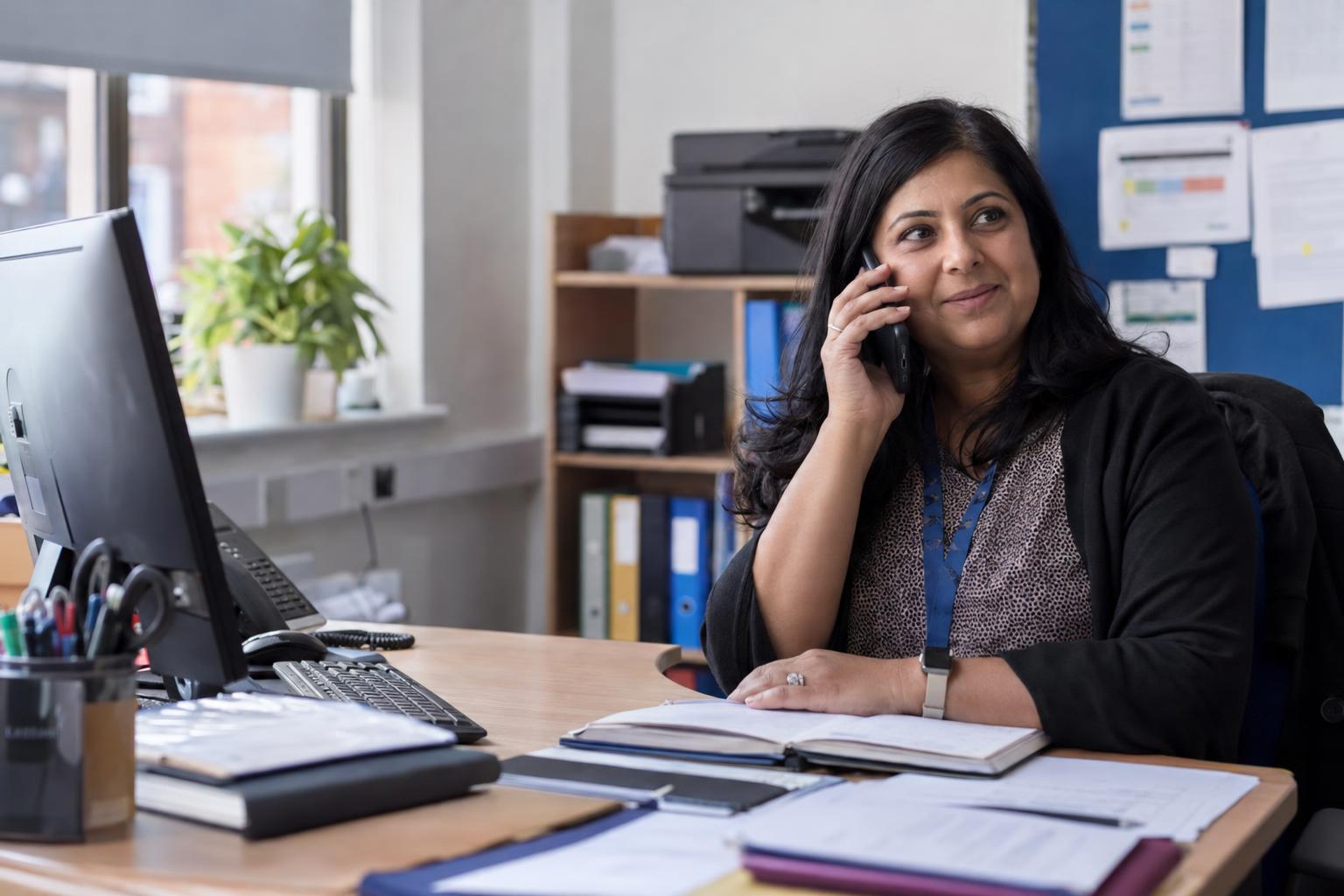
Staff use the phone's own dialler, and calls route through the school's UC platform, so the office can transfer and route calls to staff wherever they are. Calls can be recorded where the school's policy requires it and its platform is set up to do so.
IT manages every line from one place.
What Changes
The first change is reach. Staff can be contacted on a school number wherever they are on site, so the office spends less time chasing people.
The second is the estate. Desk phones and some radios are no longer needed, and the school avoids buying extra phones for staff who already carry one.
The third is safeguarding. Contact with parents happens on the school's number and within the school's own policies, not on personal phones.
Key Changes
- Staff reachable on a school number anywhere on site
- Fewer desk phones and radios
- No personal numbers given to parents
- Every line managed by IT in one place
Assessment
Nine questions about your own school. The ones you can't answer are the ones worth looking into.
How it works today
- How do staff communicate while moving around the site?
- Are you using desk phones, radios, personal mobiles, or all three?
- How do staff contact parents today?
What it is costing
- How many staff work away from an office during the school day?
- Are you paying for desk phones and mobile contracts at the same time?
- What challenges does IT face managing communications across the site?
What would change
- What would every member of staff reachable on a school number be worth?
- What happens today when a member of staff leaves with contact information?
- What would safeguarding gain from contact happening on school numbers?
Schools need staff to be reachable without adding cost or complexity. Putting the school's line on the phones staff already carry, and on rugged devices where the job needs them, does that without changing how anyone makes a call.
It is an approach that fits how schools actually work.
Looking Ahead
Illustrative scenario. Not a specific customer.
Learn More
Visit tango-networks.com or contact your local Tango Extend partner
for a personalised demonstration.
Version 3.0 · November 2026