%20--%3e%3csvg%20version='1.1'%20id='Layer_1'%20xmlns='http://www.w3.org/2000/svg'%20xmlns:xlink='http://www.w3.org/1999/xlink'%20x='0px'%20y='0px'%20viewBox='0%200%20546.4%2051'%20style='enable-background:new%200%200%20546.4%2051;'%20xml:space='preserve'%3e%3cstyle%20type='text/css'%3e%20.st0{fill:%23172A80;}%20.st1{fill-rule:evenodd;clip-rule:evenodd;fill:%23F5A623;}%20%3c/style%3e%3cg%3e%3cpath%20class='st0'%20d='M14.9,9.1H0V1.2h38.4v7.8H23.5v40.7h-8.6V9.1z'/%3e%3cpath%20class='st0'%20d='M53,1.2h7.5l20.9,48.5h-9.9L67,38.7H45.9l-4.4,11.1h-9.7L53,1.2z%20M64,31.3l-7.5-19.7l-7.6,19.7H64z'/%3e%3cpath%20class='st0'%20d='M86.1,1.2h11.5l23.5,36.1h0.1V1.2h8.6v48.5h-11l-24-37.2h-0.1v37.2h-8.6V1.2z'/%3e%3cpath%20class='st0'%20d='M183.2,46.2c-6,3.2-12.7,4.8-20.1,4.8c-3.7,0-7.2-0.6-10.3-1.8c-3.1-1.2-5.8-2.9-8.1-5.1c-2.3-2.2-4-4.9-5.3-8%20c-1.3-3.1-1.9-6.6-1.9-10.4c0-3.9,0.6-7.4,1.9-10.6c1.3-3.2,3.1-5.9,5.3-8.1c2.3-2.2,5-4,8.1-5.2c3.1-1.2,6.6-1.8,10.3-1.8%20c3.7,0,7.2,0.4,10.4,1.3c3.2,0.9,6.1,2.5,8.7,4.8l-6.4,6.4c-1.6-1.5-3.4-2.7-5.7-3.5c-2.2-0.8-4.6-1.2-7-1.2%20c-2.5,0-4.8,0.4-6.8,1.3c-2,0.9-3.8,2.1-5.2,3.7c-1.5,1.6-2.6,3.4-3.4,5.5c-0.8,2.1-1.2,4.4-1.2,6.8c0,2.6,0.4,5,1.2,7.2%20c0.8,2.2,1.9,4.1,3.4,5.7c1.5,1.6,3.2,2.9,5.2,3.8c2,0.9,4.3,1.4,6.8,1.4c2.2,0,4.3-0.2,6.2-0.6c1.9-0.4,3.7-1.1,5.2-1.9V29.2h-9.9%20v-7.8h18.6V46.2z'/%3e%3cpath%20class='st0'%20d='M190.1,25.7c0-3.9,0.6-7.4,1.9-10.6c1.3-3.2,3.1-5.9,5.3-8.1c2.3-2.2,5-4,8.1-5.2C208.5,0.6,212,0,215.7,0%20c3.8,0,7.3,0.5,10.4,1.7s5.9,2.9,8.2,5.1c2.3,2.2,4.1,4.9,5.3,8.1c1.3,3.2,1.9,6.7,1.9,10.6c0,3.8-0.6,7.2-1.9,10.4%20c-1.3,3.1-3.1,5.8-5.3,8c-2.3,2.2-5,4-8.2,5.2s-6.6,1.9-10.4,2c-3.7,0-7.2-0.6-10.3-1.8c-3.1-1.2-5.8-2.9-8.1-5.1%20c-2.3-2.2-4-4.9-5.3-8C190.7,33,190.1,29.5,190.1,25.7z%20M199.1,25.2c0,2.6,0.4,5,1.2,7.2c0.8,2.2,1.9,4.1,3.4,5.7%20c1.5,1.6,3.2,2.9,5.2,3.8c2,0.9,4.3,1.4,6.8,1.4c2.5,0,4.8-0.5,6.9-1.4c2.1-0.9,3.8-2.2,5.3-3.8c1.5-1.6,2.6-3.5,3.4-5.7%20c0.8-2.2,1.2-4.6,1.2-7.2c0-2.4-0.4-4.7-1.2-6.8c-0.8-2.1-1.9-3.9-3.4-5.5c-1.5-1.6-3.2-2.8-5.3-3.7c-2.1-0.9-4.3-1.3-6.9-1.3%20c-2.5,0-4.8,0.4-6.8,1.3c-2,0.9-3.8,2.1-5.2,3.7c-1.5,1.6-2.6,3.4-3.4,5.5C199.5,20.5,199.1,22.7,199.1,25.2z'/%3e%3c/g%3e%3cg%3e%3cg%3e%3cpath%20class='st0'%20d='M268.8,1.2H301v7.8h-23.5V21h22.3v7.8h-22.3V42h24.8v7.8h-33.4V1.2z'/%3e%3cpath%20class='st0'%20d='M378.8,9.1h-14.9V1.2h38.4v7.8h-14.9v40.7h-8.6V9.1z'/%3e%3cpath%20class='st0'%20d='M407.5,1.2h32.2v7.8h-23.5V21h22.3v7.8h-22.3V42h24.8v7.8h-33.4V1.2z'/%3e%3cpath%20class='st0'%20d='M448.7,1.2h11.5l23.5,36.1h0.1V1.2h8.6v48.5h-11l-24-37.2h-0.1v37.2h-8.6V1.2z'/%3e%3cpath%20class='st0'%20d='M502.6,1.2h19.1c3.2,0,6.3,0.5,9.3,1.5c3,1,5.6,2.5,7.9,4.5c2.3,2,4.1,4.5,5.5,7.6c1.4,3,2.1,6.6,2.1,10.7%20c0,4.2-0.8,7.8-2.4,10.8c-1.6,3-3.6,5.6-6.1,7.5c-2.5,2-5.3,3.5-8.3,4.5c-3,1-6,1.5-8.9,1.5h-18.1V1.2z%20M517.7,42%20c2.7,0,5.2-0.3,7.6-0.9c2.4-0.6,4.5-1.6,6.3-2.9c1.8-1.3,3.2-3,4.2-5.1c1-2.1,1.5-4.6,1.5-7.6c0-2.9-0.5-5.4-1.4-7.5%20c-0.9-2.1-2.2-3.8-3.8-5.1c-1.6-1.3-3.5-2.3-5.8-2.9c-2.2-0.6-4.7-0.9-7.3-0.9h-7.9V42H517.7z'/%3e%3c/g%3e%3cg%3e%3cpolygon%20class='st0'%20points='348.8,1.3%20338.5,17%20328.3,1.3%20315.8,1.3%20332.1,25.1%20315.1,49.8%20327.3,49.8%20338.2,33.2%20349.1,49.8%20361.6,49.8%20344.7,25%20360.9,1.3%20'/%3e%3cg%3e%3cpolygon%20class='st1'%20points='306.4,1.2%20322,25%20305.4,49.9%20310.2,49.9%20327,25%20311.2,1.2%20'/%3e%3c/g%3e%3c/g%3e%3c/g%3e%3c/svg%3e)

MANUFACTURING USE CASE
Replacing DECT Across a Manufacturing Estate
Manufacturing runs across plants, warehouses, regional offices and time zones. On many sites the phone is still an ageing DECT handset that works only within range of its base stations, while the people who need to be reached are increasingly mobile.
This use case sets out what changes when DECT is replaced with a business line on a mobile, so staff carry one number across the plant, the site and beyond.
At-a-Glance
- Sector
- Manufacturing, supply chain and distribution
- Setting
- Plants, warehouses and regional offices across countries
- Teams
- Plant, maintenance, supply chain and sales
- Deployment
- Business line on personal, company or rugged handsets
- Platform
- The organisation's existing UC platform
Solution Highlights
- Replaces DECT handsets and base stations
- Devices matched to each role, including rugged
- Native dialler, no app and no retraining
- One setup across sites and countries
The Challenge
A manufacturing estate can span dozens of sites and teams, from plant managers on the shop floor to supply-chain coordinators and sales staff on the road. Many still rely on DECT systems and mixed device fleets that are not part of the UC platform. Calls go unanswered, caller identity is inconsistent, and coverage stops at the edge of the base stations.
Every DECT refresh means more handsets, more base stations and more maintenance, for a phone that cannot leave the site.
The Solution
Each member of staff carries a business line on a mobile, delivered by eSIM: on their own phone, a company smartphone or a rugged device for the shop floor.
Staff use the phone's own dialler, so there is no app to learn. Calls route through the UC platform, so routing, forwarding, voicemail and calling policies work as they do for a desk phone, and calls can be recorded where the organisation's platform is set up to record them.
Because the line is on a mobile network rather than a DECT base station, the same number works across the plant, between sites and when travelling.
What Changes
The first change is reach. Staff can be called on one number wherever they are on site or off it, rather than only within range of a base station.
The second is the estate. DECT handsets and base stations no longer need to be bought, repaired and refreshed, and new sites or teams are provisioned rather than wired.
The third is control. IT sets calling policies centrally for every user, wherever they are located.
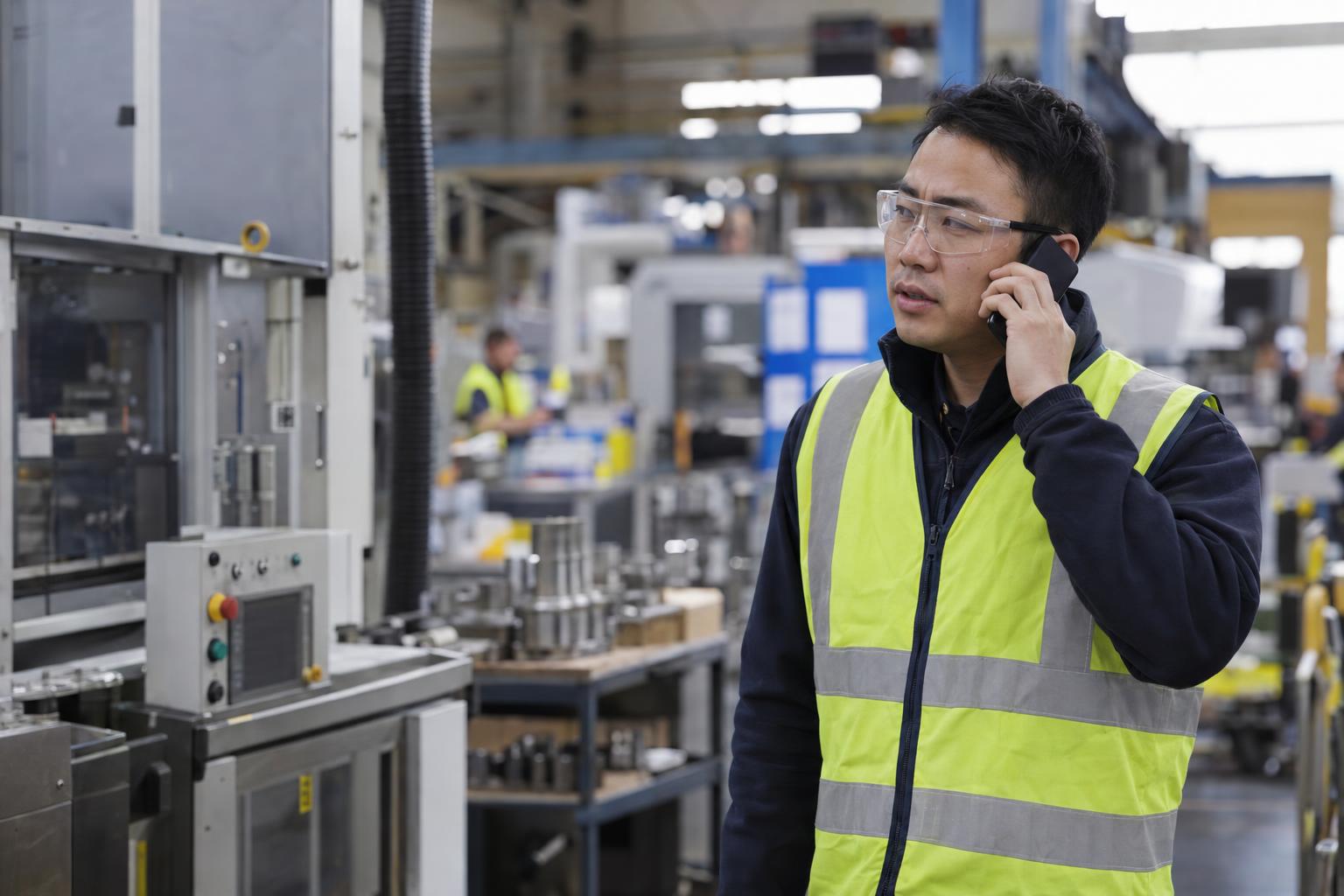
Key Changes
- DECT handsets and base stations retired
- One number on site, between sites and abroad
- No app and no retraining for staff
- Central calling policies for every user
Assessment
Nine questions about your own operation. The ones you can't answer are the ones worth looking into.
How it works today
- How do production and supply-chain teams communicate across sites?
- Are mobile calls part of your UC platform, or managed separately?
- Do staff use personal devices for business calls, and how is that controlled?
What it is costing
- What do you spend maintaining DECT handsets and base stations?
- How often do missed calls affect production or supplier coordination?
- How many sites are due a DECT refresh?
What would change
- What would one company identity on every outbound call be worth?
- Which site would you pilot first?
- What could you roll out internationally if no retraining were needed?
DECT was built for a workforce that stayed within range of a base station. Putting a business line on the mobile staff already carry, or a rugged device where the job needs one, removes that limit without changing how anyone makes a call.
The result is one approach from the shop floor to the regional office, managed in one place.
Looking Ahead
Illustrative scenario. Not a specific customer.
Learn More
Visit tango-networks.com or contact your local Tango Extend partner
for a personalised demonstration.
Version 5.0 · November 2026