%20--%3e%3csvg%20version='1.1'%20id='Layer_1'%20xmlns='http://www.w3.org/2000/svg'%20xmlns:xlink='http://www.w3.org/1999/xlink'%20x='0px'%20y='0px'%20viewBox='0%200%20546.4%2051'%20style='enable-background:new%200%200%20546.4%2051;'%20xml:space='preserve'%3e%3cstyle%20type='text/css'%3e%20.st0{fill:%23172A80;}%20.st1{fill-rule:evenodd;clip-rule:evenodd;fill:%23F5A623;}%20%3c/style%3e%3cg%3e%3cpath%20class='st0'%20d='M14.9,9.1H0V1.2h38.4v7.8H23.5v40.7h-8.6V9.1z'/%3e%3cpath%20class='st0'%20d='M53,1.2h7.5l20.9,48.5h-9.9L67,38.7H45.9l-4.4,11.1h-9.7L53,1.2z%20M64,31.3l-7.5-19.7l-7.6,19.7H64z'/%3e%3cpath%20class='st0'%20d='M86.1,1.2h11.5l23.5,36.1h0.1V1.2h8.6v48.5h-11l-24-37.2h-0.1v37.2h-8.6V1.2z'/%3e%3cpath%20class='st0'%20d='M183.2,46.2c-6,3.2-12.7,4.8-20.1,4.8c-3.7,0-7.2-0.6-10.3-1.8c-3.1-1.2-5.8-2.9-8.1-5.1c-2.3-2.2-4-4.9-5.3-8%20c-1.3-3.1-1.9-6.6-1.9-10.4c0-3.9,0.6-7.4,1.9-10.6c1.3-3.2,3.1-5.9,5.3-8.1c2.3-2.2,5-4,8.1-5.2c3.1-1.2,6.6-1.8,10.3-1.8%20c3.7,0,7.2,0.4,10.4,1.3c3.2,0.9,6.1,2.5,8.7,4.8l-6.4,6.4c-1.6-1.5-3.4-2.7-5.7-3.5c-2.2-0.8-4.6-1.2-7-1.2%20c-2.5,0-4.8,0.4-6.8,1.3c-2,0.9-3.8,2.1-5.2,3.7c-1.5,1.6-2.6,3.4-3.4,5.5c-0.8,2.1-1.2,4.4-1.2,6.8c0,2.6,0.4,5,1.2,7.2%20c0.8,2.2,1.9,4.1,3.4,5.7c1.5,1.6,3.2,2.9,5.2,3.8c2,0.9,4.3,1.4,6.8,1.4c2.2,0,4.3-0.2,6.2-0.6c1.9-0.4,3.7-1.1,5.2-1.9V29.2h-9.9%20v-7.8h18.6V46.2z'/%3e%3cpath%20class='st0'%20d='M190.1,25.7c0-3.9,0.6-7.4,1.9-10.6c1.3-3.2,3.1-5.9,5.3-8.1c2.3-2.2,5-4,8.1-5.2C208.5,0.6,212,0,215.7,0%20c3.8,0,7.3,0.5,10.4,1.7s5.9,2.9,8.2,5.1c2.3,2.2,4.1,4.9,5.3,8.1c1.3,3.2,1.9,6.7,1.9,10.6c0,3.8-0.6,7.2-1.9,10.4%20c-1.3,3.1-3.1,5.8-5.3,8c-2.3,2.2-5,4-8.2,5.2s-6.6,1.9-10.4,2c-3.7,0-7.2-0.6-10.3-1.8c-3.1-1.2-5.8-2.9-8.1-5.1%20c-2.3-2.2-4-4.9-5.3-8C190.7,33,190.1,29.5,190.1,25.7z%20M199.1,25.2c0,2.6,0.4,5,1.2,7.2c0.8,2.2,1.9,4.1,3.4,5.7%20c1.5,1.6,3.2,2.9,5.2,3.8c2,0.9,4.3,1.4,6.8,1.4c2.5,0,4.8-0.5,6.9-1.4c2.1-0.9,3.8-2.2,5.3-3.8c1.5-1.6,2.6-3.5,3.4-5.7%20c0.8-2.2,1.2-4.6,1.2-7.2c0-2.4-0.4-4.7-1.2-6.8c-0.8-2.1-1.9-3.9-3.4-5.5c-1.5-1.6-3.2-2.8-5.3-3.7c-2.1-0.9-4.3-1.3-6.9-1.3%20c-2.5,0-4.8,0.4-6.8,1.3c-2,0.9-3.8,2.1-5.2,3.7c-1.5,1.6-2.6,3.4-3.4,5.5C199.5,20.5,199.1,22.7,199.1,25.2z'/%3e%3c/g%3e%3cg%3e%3cg%3e%3cpath%20class='st0'%20d='M268.8,1.2H301v7.8h-23.5V21h22.3v7.8h-22.3V42h24.8v7.8h-33.4V1.2z'/%3e%3cpath%20class='st0'%20d='M378.8,9.1h-14.9V1.2h38.4v7.8h-14.9v40.7h-8.6V9.1z'/%3e%3cpath%20class='st0'%20d='M407.5,1.2h32.2v7.8h-23.5V21h22.3v7.8h-22.3V42h24.8v7.8h-33.4V1.2z'/%3e%3cpath%20class='st0'%20d='M448.7,1.2h11.5l23.5,36.1h0.1V1.2h8.6v48.5h-11l-24-37.2h-0.1v37.2h-8.6V1.2z'/%3e%3cpath%20class='st0'%20d='M502.6,1.2h19.1c3.2,0,6.3,0.5,9.3,1.5c3,1,5.6,2.5,7.9,4.5c2.3,2,4.1,4.5,5.5,7.6c1.4,3,2.1,6.6,2.1,10.7%20c0,4.2-0.8,7.8-2.4,10.8c-1.6,3-3.6,5.6-6.1,7.5c-2.5,2-5.3,3.5-8.3,4.5c-3,1-6,1.5-8.9,1.5h-18.1V1.2z%20M517.7,42%20c2.7,0,5.2-0.3,7.6-0.9c2.4-0.6,4.5-1.6,6.3-2.9c1.8-1.3,3.2-3,4.2-5.1c1-2.1,1.5-4.6,1.5-7.6c0-2.9-0.5-5.4-1.4-7.5%20c-0.9-2.1-2.2-3.8-3.8-5.1c-1.6-1.3-3.5-2.3-5.8-2.9c-2.2-0.6-4.7-0.9-7.3-0.9h-7.9V42H517.7z'/%3e%3c/g%3e%3cg%3e%3cpolygon%20class='st0'%20points='348.8,1.3%20338.5,17%20328.3,1.3%20315.8,1.3%20332.1,25.1%20315.1,49.8%20327.3,49.8%20338.2,33.2%20349.1,49.8%20361.6,49.8%20344.7,25%20360.9,1.3%20'/%3e%3cg%3e%3cpolygon%20class='st1'%20points='306.4,1.2%20322,25%20305.4,49.9%20310.2,49.9%20327,25%20311.2,1.2%20'/%3e%3c/g%3e%3c/g%3e%3c/g%3e%3c/svg%3e)

RETAIL USE CASE
Fashion Retail Without Fixed Phones
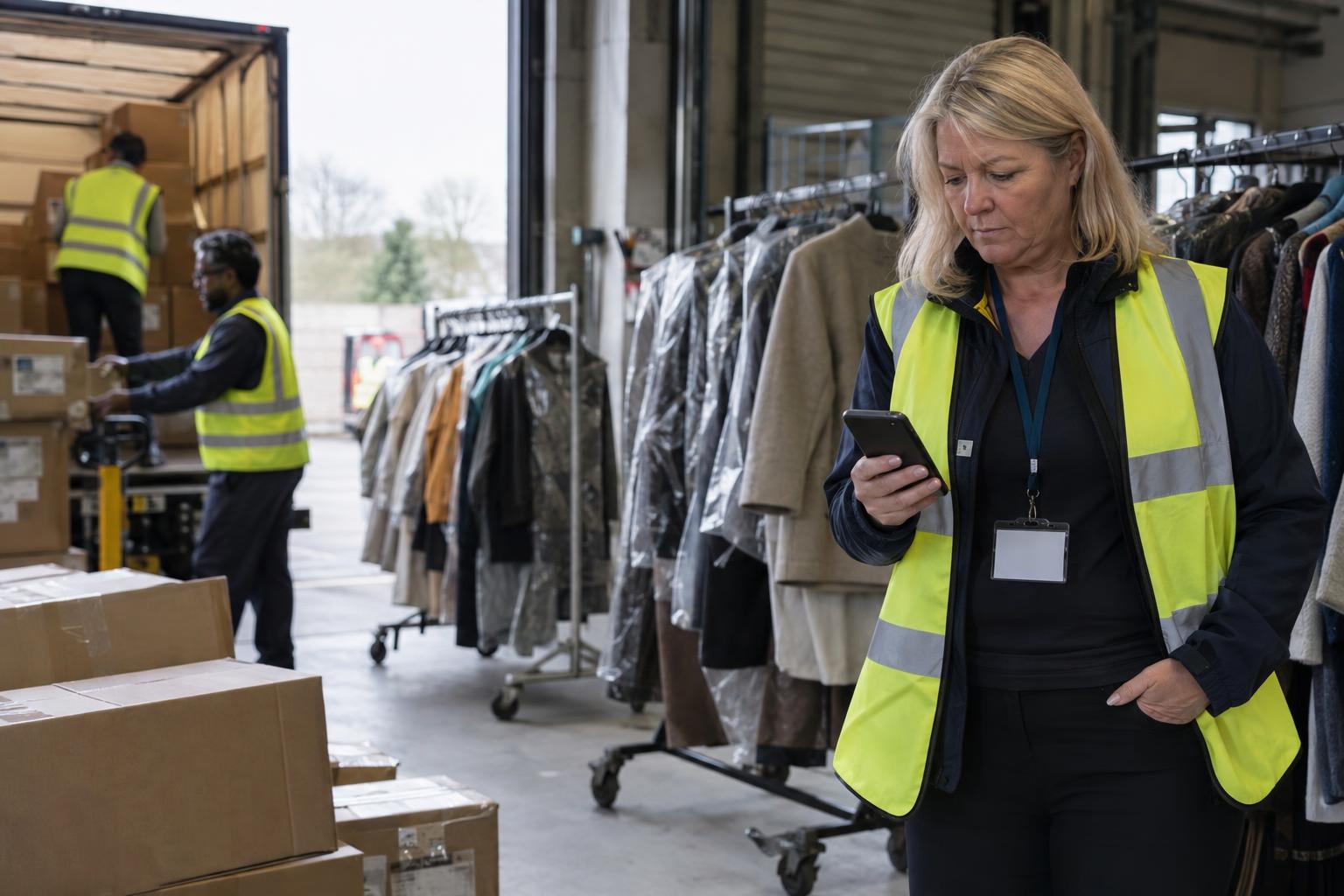
In fashion retail the people customers need are on the shop floor, in the stockroom, in the warehouse or on a delivery round, almost never next to a desk phone.
This use case sets out what changes when a retailer makes the mobile the standard business phone for every role, from store to warehouse to van.
At-a-Glance
- Sector
- Fashion retail with regional operations
- Setting
- Stores, distribution centres and delivery routes
- Teams
- Store staff, warehouse teams, delivery drivers
- Deployment
- Business line by eSIM, activated by QR code
- Platform
- The retailer's existing UC platform
Solution Highlights
- Native dialler, no app required
- One business number for every role
- Department calls reach whoever is on shift
- QR code set-up, no hardware to ship
The Challenge
Store staff miss customer calls when they are away from the till, warehouse teams fall back on informal messaging, and drivers give customers their personal numbers. Customers get an inconsistent experience, and IT has little visibility of what happens.
Desk phones sit unused, calling apps are installed but rarely opened, and staff default to their own phone's dialler. Meanwhile the business pays for several devices and contracts per person.
The Solution
Every member of staff gets a business line on their mobile via eSIM, activated by scanning a QR code. Store, warehouse and delivery teams make and take calls in the phone's own dialler, on the business number.
Calls route through the retailer's UC platform, so department queues ring whoever is on shift, and routing and reporting are managed centrally. Calls can be recorded where the retailer's platform is set up to record them.
Stores and sites can be switched over one at a time, with no handsets to buy, programme or collect.
What Changes
The first change is the customer's experience. Store staff and drivers can be reached on a business number the customer recognises, and calls to a department reach someone rather than an empty till.
The second is the estate. Desk phones and second devices are no longer needed for every team, so there are fewer devices and contracts to manage.
The third is visibility. IT manages every line through the UC platform: who is in which queue, and what happens to a number when someone leaves.
Key Changes
- Customers reach the right team on a business number
- Fewer desk phones and second devices
- Every line managed through the UC platform
- Numbers stay with the business when staff leave
Assessment
Nine questions about your own operation. The ones you can't answer are the ones worth looking into.
How it works today
- How do store, warehouse and delivery teams take business calls today?
- Which number does a customer hold for your store staff and drivers?
- How many of your people use a personal mobile for work calls?
What it is costing
- How many customer calls go unanswered when staff are away from a till?
- What do you spend across handsets, contracts and suppliers each year?
- How much of your mobile call activity appears in your reporting?
What would change
- What would one business number across every role be worth to you?
- What could IT do with full visibility of mobile calls?
- What happens today when someone leaves, and what should happen?
Making the mobile the standard business phone replaces a mix of desk phones, apps and personal numbers with one approach that works for every role, from the shop floor to the customer's door.
For the customer, the store simply becomes easier to reach.
Looking Ahead
Illustrative scenario. Not a specific customer.
Learn More
Visit tango-networks.com or contact your local Tango Extend partner
for a personalised demonstration.
Version 5.0 · November 2026